XRI: Certified for International Airworthiness, Joining Forces with State Capital for Aerospace Expansion
The airworthiness approval issued by the United States Federal Aviation Administration (FAA) ranks among the most authoritative and highest‑barrier certifications in global aviation safety.
The FAA carries out rigorous qualification review for civil aviation products across the full lifecycle, covering design, manufacturing, operation and maintenance. Obtaining this approval means the product achieves world‑class performance, safety and reliability under extreme operating conditions and is eligible for legal installation on civil aircraft.
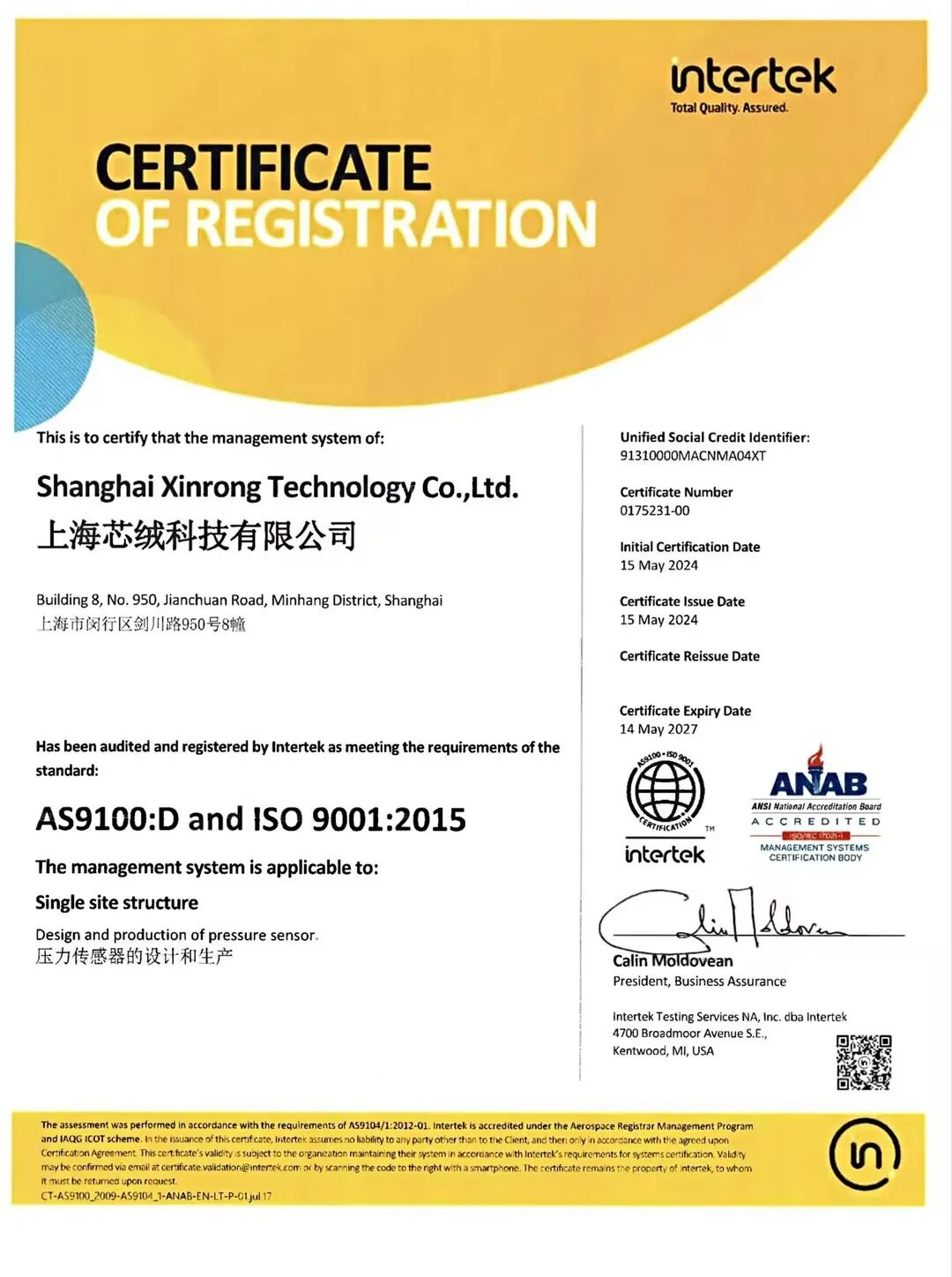
AS9100D is an international quality‑management‑system standard dedicated to the aerospace and defense industry, built upon ISO 9001:2015. It requires enterprises to adhere to the "zero‑defect" quality philosophy throughout the complete product lifecycle, and implement full‑process traceable control from design and manufacturing to product delivery.
This certification is a mandatory pre‑qualification criterion for prime OEMs such as Boeing, Airbus and COMAC to select suppliers. Enterprises without this certification cannot gain access to mainstream aerospace supply chains.
XRI holds the AS9100D aerospace quality management system certification issued by the International Aerospace Quality Group (IAQG), together with FAA‑granted airworthiness approval for sensors. It is one of the few domestic civil sensor enterprises in China to possess both credentials.
These represent far more than paper certificates. They form a significant competitive moat that excludes most competitors from the aerospace market. Within the aviation industry, securing any airworthiness approval generally takes several years and requires investments of millions of RMB. XRI achieved this accomplishment merely two years after its establishment, highlighting its outstanding technical research‑and‑development capabilities.